Thursday, December 15, 2005
[04.00 GMT] This from Salt Lake Tribune - an interview with Will Van Wagenen, “a Salt Lake City native who recently returned from four months in Iraq working with [Tom] Fox and other members of the nonprofit Christian Peacemaker Teams.” Street Corner Society also quotes two other CPTers. One is founder Gene Stoltzfus. See Retired CPT director worried about detainees in Baghdad, by Heather Ogilvie, in the Fort Frances Times.


[275.1] SAYING NO TO CAESAR'S "PEACE"
 "John Dominic Crossan, I believe, reminded us that Caesar was called the Prince of Peace, and that the [meaning] in naming Jesus the Prince of Peace was to send a message to the Romans that peace is not the outcome of beating others into submission, but is the result of making peace first, not as the quiet between the wars." [more]
Lorcan Otway, writing on Hopeful Imagination - an Advent weblog
Comment on this post: FaithInSociety
 "John Dominic Crossan, I believe, reminded us that Caesar was called the Prince of Peace, and that the [meaning] in naming Jesus the Prince of Peace was to send a message to the Romans that peace is not the outcome of beating others into submission, but is the result of making peace first, not as the quiet between the wars." [more]
Lorcan Otway, writing on Hopeful Imagination - an Advent weblog
Comment on this post: FaithInSociety
Wednesday, December 14, 2005
 [19.00 GMT]. Very little news. Former kidnap victims share anguish (Globe and Mail). Three British Muslims killed in Iraq identified (Muslim News). For those who have not heard it, this is the radio interview with Dr Norman Kember first broadcast on Premier (press release with excerpts here), a London-based Christian radio station on 11 November 2005. (The reference to him being an 'aid' worker is incorrect). It was repeated, in English and in a specially commissioned Arabic translation, on Al-jazeera last week. Christian Peacemaker Teams archive and resources on the kidnap situation. FoR latest. Pax Christi prayer and action leaflet (*.PDF).
[14.12 GMT]: All quiet ahead of Iraq vote (CBS); Report on UK anti-war conference; Canadian Muslim envoy returns empty-handed; Al-jazeera - inundated with appeals for the hostages; British Satellite News vigil report; Christian peacemakers demand entry to Guantanamo Bay 14/12/05
[02.03 GMT] Canadian churches pray for missing peace activists, 14/12/05. Islamic Army in Iraq link to peace activist hostages confirmed (The Jawa Report - mix of information and speculation, from a source with a particular sceptical POV.) Hostage believed peace mission was worth the risk.
[02.03 GMT] Canadian churches pray for missing peace activists, 14/12/05. Islamic Army in Iraq link to peace activist hostages confirmed (The Jawa Report - mix of information and speculation, from a source with a particular sceptical POV.) Hostage believed peace mission was worth the risk.
[274.1] LEARNING TO PUT OURSELVES IN THE WRONG
 For those who only occasionally drop into FinS (and perhaps more so for those who do so regularly), I feel slightly apologetic that the overwhelming number of posts recently have concerned the Iraq hostage situation -- where we are now into an agonising and predictable waiting game. I hope you will understand why, but things will return to 'normal' in due course. Not that our perception of normality should remain undisturbed by such events.
One or two people have also asked me about the various criticisms of Christian Peacemaker Teams (CPT) creeping their way across the blogosphere. Well, of course, moral courage should not silence critical judgement, and there are serious issues to confront about the stance, location and tactics of "violence reduction by getting in the way". The fact that I share CPT's commitment to Christian non-violence certainly does not mean that I wish to ignore these challenges. But there are times and places. The present moment is, for me, one of solidarity and petition. Johan Maurer sums it up well in his reference to 'borrowed time', though I have found myself that the infusion of prayerful indwelling with journalistic advocacy has been liberating, even when it has meant living on the edge of despair.
Those of you who know me (or have read earlier comments of mine on this subject) will also realise that I am not uncritical of the general anti-war movement, even as I find myself keeping company with it. There is a politically lazy and morally easy self-righteousness involved in much of the rhetoric against the overthrow of Saddam's nightmarish rule which does little justice to those who suffered under his yolk, to the 65-71 per cent of Iraqis who now say that -- in spite of the conflict and chaos -- they feel better off, or to what I would call the involved depth of "the difficult peace of Christ". Christian non-violence cannot legitimately refuse facts or deny responsibility. But for those of us who see it as central to the Gospel, it remains a vital testimony to that vulnerable possibility revealed in the words, deeds, death and risen life of Jesus which is otherwise silenced and destroyed by the soteriology of taking arms. Of course this does not abolish either the ambiguity and compromise of the world, or the moral integrity of those who feel compelled to stand against injustice in other ways. But it does ask, "in what or whom do we really trust?"
More of that later, perhaps. I can certainly reference other material I have been writing in this area (search under 'peace' and 'disturbing'). In the meantime, by way of a photoshop experiment which hopefully shows that we can smile and be serious simultaneously [above], I am extremely grateful to Methodist minister Dave Warnock for providing links to these ten extraordinary podcasts by Anita David, a CPTer in Iraq.
Comment on this post: FaithInSociety
 For those who only occasionally drop into FinS (and perhaps more so for those who do so regularly), I feel slightly apologetic that the overwhelming number of posts recently have concerned the Iraq hostage situation -- where we are now into an agonising and predictable waiting game. I hope you will understand why, but things will return to 'normal' in due course. Not that our perception of normality should remain undisturbed by such events.
One or two people have also asked me about the various criticisms of Christian Peacemaker Teams (CPT) creeping their way across the blogosphere. Well, of course, moral courage should not silence critical judgement, and there are serious issues to confront about the stance, location and tactics of "violence reduction by getting in the way". The fact that I share CPT's commitment to Christian non-violence certainly does not mean that I wish to ignore these challenges. But there are times and places. The present moment is, for me, one of solidarity and petition. Johan Maurer sums it up well in his reference to 'borrowed time', though I have found myself that the infusion of prayerful indwelling with journalistic advocacy has been liberating, even when it has meant living on the edge of despair.
Those of you who know me (or have read earlier comments of mine on this subject) will also realise that I am not uncritical of the general anti-war movement, even as I find myself keeping company with it. There is a politically lazy and morally easy self-righteousness involved in much of the rhetoric against the overthrow of Saddam's nightmarish rule which does little justice to those who suffered under his yolk, to the 65-71 per cent of Iraqis who now say that -- in spite of the conflict and chaos -- they feel better off, or to what I would call the involved depth of "the difficult peace of Christ". Christian non-violence cannot legitimately refuse facts or deny responsibility. But for those of us who see it as central to the Gospel, it remains a vital testimony to that vulnerable possibility revealed in the words, deeds, death and risen life of Jesus which is otherwise silenced and destroyed by the soteriology of taking arms. Of course this does not abolish either the ambiguity and compromise of the world, or the moral integrity of those who feel compelled to stand against injustice in other ways. But it does ask, "in what or whom do we really trust?"
More of that later, perhaps. I can certainly reference other material I have been writing in this area (search under 'peace' and 'disturbing'). In the meantime, by way of a photoshop experiment which hopefully shows that we can smile and be serious simultaneously [above], I am extremely grateful to Methodist minister Dave Warnock for providing links to these ten extraordinary podcasts by Anita David, a CPTer in Iraq.
Comment on this post: FaithInSociety
Tuesday, December 13, 2005
[273.2] REDEMPTION BY LETHAL INJECTION?
[Update 11.28 GMT] Williams was executed this morning. His family and supporters say they will continue to work to clear his name. They say the decision was political, not evidence-based.
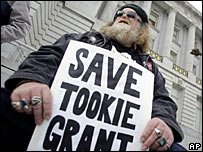 There are many lamentable things about the notion of a country deeming itself "Christian", or in the case of the United States (which I love, and from where my beloved wife and her family hail) being co-opted by self-appointed "moral majorities". The main problem is that their colonisation of faith usually renders it nonsense, and self-deceptive nonsense at that. This is well illustrated by the sad case of governor 'Terminator' Arnold Schwarzenegger and reformed Crips gang leader 'Tookie' Williams, who is about to die by lethal injection in the next few hours. The full report is here, but the following comments, juxtaposed, say it all for me.
The Los Angeles district attorney's office has said of Williams: “There can be no redemption... and there should be no mercy.”
Alex Kirby, a religious analyst for the BBC, says: “Oddly, for a country as obsessed with religious observance as the US, the Christian argument seems almost an afterthought. If it were central, the district attorney's statement would have to be withdrawn, because in traditional Christian theology everybody is eligible for redemption.”
(Kirby gets the rest of his theology of redemption, forgiveness and conversion slightly tangled after this, but I won't get into that right now. See, among others, Walter Wink, Jesus and Non-violence: A Third Way; When the Powers Fall: Reconciliation in the Healing of Nations.)
Comment on this post: FaithInSociety
[Update 11.28 GMT] Williams was executed this morning. His family and supporters say they will continue to work to clear his name. They say the decision was political, not evidence-based.
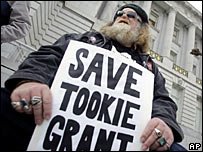 There are many lamentable things about the notion of a country deeming itself "Christian", or in the case of the United States (which I love, and from where my beloved wife and her family hail) being co-opted by self-appointed "moral majorities". The main problem is that their colonisation of faith usually renders it nonsense, and self-deceptive nonsense at that. This is well illustrated by the sad case of governor 'Terminator' Arnold Schwarzenegger and reformed Crips gang leader 'Tookie' Williams, who is about to die by lethal injection in the next few hours. The full report is here, but the following comments, juxtaposed, say it all for me.
The Los Angeles district attorney's office has said of Williams: “There can be no redemption... and there should be no mercy.”
Alex Kirby, a religious analyst for the BBC, says: “Oddly, for a country as obsessed with religious observance as the US, the Christian argument seems almost an afterthought. If it were central, the district attorney's statement would have to be withdrawn, because in traditional Christian theology everybody is eligible for redemption.”
(Kirby gets the rest of his theology of redemption, forgiveness and conversion slightly tangled after this, but I won't get into that right now. See, among others, Walter Wink, Jesus and Non-violence: A Third Way; When the Powers Fall: Reconciliation in the Healing of Nations.)
Comment on this post: FaithInSociety
[273.1] ONE IS STANDING AMONG YOU WHOM YOU DO NOT KNOW
Thanks to Maggi Dawn for this, and for her succinct reflection on the history, liturgy and calling of Advent: "This Gaudete Sunday, I – like many others – [had] the image of Norman Kember and other hostages in my mind: the waiting, the already-not-yet taking on a particularly poignant intensity because of the plight of these Christian peacemakers who are in danger. Let’s pray today for all who wait and hope for release from oppression and fear.
Into the darkness of this world,
Into the shadows of the night,
Into this loveless place you came,
lightened our burden, eased our pain,
and made these hearts your home.
Into the darkness once again,
Oh Come, Lord Jesus, Come. (c) 1993 Thankyou Music
Comment on this post: FaithInSociety
Thanks to Maggi Dawn for this, and for her succinct reflection on the history, liturgy and calling of Advent: "This Gaudete Sunday, I – like many others – [had] the image of Norman Kember and other hostages in my mind: the waiting, the already-not-yet taking on a particularly poignant intensity because of the plight of these Christian peacemakers who are in danger. Let’s pray today for all who wait and hope for release from oppression and fear.
Into the darkness of this world,
Into the shadows of the night,
Into this loveless place you came,
lightened our burden, eased our pain,
and made these hearts your home.
Into the darkness once again,
Oh Come, Lord Jesus, Come. (c) 1993 Thankyou Music
Comment on this post: FaithInSociety
Monday, December 12, 2005
[272.2] WHAT ON EARTH ARE WE WAITING FOR?
An advent reflection....
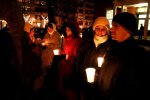 The season of Advent is one of waiting in nervous anticipation for genuine hope to be made available. For Christians the shape of that hope is known to be Jesus, the man-for-others, who gives up a throne for a crib and a crown for a cross.
It is in his most vulnerable humanity (and ours) that the truth of God is known – a truth that invites us towards, but does not force upon us, transformation and community in the midst of fragmentation and contingency.
Real Advent hope is therefore realism not fantasy, a beginning not an end. The world is broken, bruised and tortured, it tells us. And so are we. Yet what lies in and beyond the terrifying freedom of the universe and its ‘thinking reeds’ is a love which embraces and sustains more than we could ever describe, a love which is available to us without fear or favour, often in the most unlikely form. [Full article here]
Comment on this post: FaithInSociety
An advent reflection....
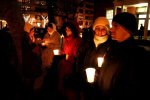 The season of Advent is one of waiting in nervous anticipation for genuine hope to be made available. For Christians the shape of that hope is known to be Jesus, the man-for-others, who gives up a throne for a crib and a crown for a cross.
It is in his most vulnerable humanity (and ours) that the truth of God is known – a truth that invites us towards, but does not force upon us, transformation and community in the midst of fragmentation and contingency.
Real Advent hope is therefore realism not fantasy, a beginning not an end. The world is broken, bruised and tortured, it tells us. And so are we. Yet what lies in and beyond the terrifying freedom of the universe and its ‘thinking reeds’ is a love which embraces and sustains more than we could ever describe, a love which is available to us without fear or favour, often in the most unlikely form. [Full article here]
Comment on this post: FaithInSociety
[06.05 GMT] SILENCE IN IRAQ: (BBC) Friends and family of Norman Kember have endured an agonising wait for news. Chris Cole, director of the Fellowship of Reconciliation, of which the pensioner is a trustee, said: "We are looking for a miracle at this stage." Bruce Kent, a friend of Mr Kember for 15 years, said: "I haven't given up hope at all. They may be working on some way of getting off the hook without losing face.It's quite possible they may be preparing a video to say why they are releasing them."
[272.1] A BEATITUDE FOR MISSING FRIENDS
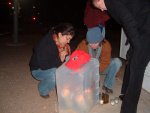 Officials and families seek news on Iraq Christian peace workers 12/12/05, 01.30 GMT
News on the continuing search, comment from a Canadian security expert, differing views on the implications of the captors' silence, and an update from Jim Loney's home parish in Ontario. [01.35GMT, Gulf Daily News: An Iraqi insurgent group claimed the kidnapping of four Iranians on a religious mission to the war-torn country, according to a video shown on the Al Arabiya channel. "Initial investigation confirmed they were dispatched on an official mission by the hawza (religious authority) in Qom," said the channel's anchorman, reading a statement from a group called the Saad bin Abi Waqas Brigades.]
Here is another support from Friends United Meeting, USA.
This litany of the Beatitudes was composed by Jim before the first Gulf War (thanks to CPT and Mennonite Church USA):
Officials and families seek news on Iraq Christian peace workers 12/12/05, 01.30 GMTNews on the continuing search, comment from a Canadian security expert, differing views on the implications of the captors' silence, and an update from Jim Loney's home parish in Ontario. [01.35GMT, Gulf Daily News: An Iraqi insurgent group claimed the kidnapping of four Iranians on a religious mission to the war-torn country, according to a video shown on the Al Arabiya channel. "Initial investigation confirmed they were dispatched on an official mission by the hawza (religious authority) in Qom," said the channel's anchorman, reading a statement from a group called the Saad bin Abi Waqas Brigades.]
Here is another support from Friends United Meeting, USA.
This litany of the Beatitudes was composed by Jim before the first Gulf War (thanks to CPT and Mennonite Church USA):
Let us pray – You have learned how it is said
Love your neighbour and hate your enemy
But I say this to you who are listening...
Love your enemies
Do good to those who hate you
Bless those who curse you
Be compassionate
Judge not
Do not condemn
Grant pardon
Because the amount you measure out
Is the amount you will be given back
Let everything you do
Be done in love
Blessed are the poor
For theirs is the kingdom of God
Blessed are they who mourn now
For they will be comforted
Blessed are the meek
For they will inherit the earth
Blessed are they who hunger and thirst for justice
For they will be satisfied
Blessed are the merciful
For they will be shown mercy
Blessed are the pure in heart
For they will see God
Blessed are the peacemakers
For they will be called the daughters and sons of God
Blessed are they who are persecuted because of righteousness
For theirs is the kingdom of heaven.
Pic on this and the last three posts c/o CPT
Comment on this post: FaithInSociety
Sunday, December 11, 2005
[271.2] KEMBER VIGIL IN LONDON ON MONDAY
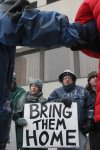 At St Martin's-in-the-Field, Trafalagar Square, London, from 18:00-19:00, tomorrow evening. Details on Independent Catholic News, and later today on Ekklesia. People are also asked to maintain a period of quiet and prayer at midday, daily.
13.05 GMT. A representative of the Iraqi government has told the BBC that, in the absence of further news, attempts to secure the release of the four CPTers and the two other abductees continues, but that the kidnap gang are "an unknown group" with whom there has been no direct contact. The Iraqi prime minister has said that the insurgents who have continued kidnapping and killing across the country are composed of three factions - Saddamists, militants from outside the country, and "those who think that all except themselves are interlopers."
A full briefing on CPT can be found here.
Further prayer vigil information; Mennonite Church USA Peace and Justice Support Network. Mennonite Church Canada. UK vigils - Fellowship of Reconciliation. Pax Christi (*.PDF).
See also Observer Focus: the race against time in Iraq - How the Muslim world battled for the life of Norman Kember. A good background piece by Jamie Doward, who quotes my colleague Jonathan Bartley. And this piece by Michelle Naar Obed, who knows two of the captives personally.
Petition for the release of the four.
Comment on this post: FaithInSociety
 At St Martin's-in-the-Field, Trafalagar Square, London, from 18:00-19:00, tomorrow evening. Details on Independent Catholic News, and later today on Ekklesia. People are also asked to maintain a period of quiet and prayer at midday, daily.
13.05 GMT. A representative of the Iraqi government has told the BBC that, in the absence of further news, attempts to secure the release of the four CPTers and the two other abductees continues, but that the kidnap gang are "an unknown group" with whom there has been no direct contact. The Iraqi prime minister has said that the insurgents who have continued kidnapping and killing across the country are composed of three factions - Saddamists, militants from outside the country, and "those who think that all except themselves are interlopers."
A full briefing on CPT can be found here.
Further prayer vigil information; Mennonite Church USA Peace and Justice Support Network. Mennonite Church Canada. UK vigils - Fellowship of Reconciliation. Pax Christi (*.PDF).
See also Observer Focus: the race against time in Iraq - How the Muslim world battled for the life of Norman Kember. A good background piece by Jamie Doward, who quotes my colleague Jonathan Bartley. And this piece by Michelle Naar Obed, who knows two of the captives personally.
Petition for the release of the four.
Comment on this post: FaithInSociety
[271.1] PRAYING THAT NO NEWS IS GOOD NEWS
Jesus said: "Love your enemies and pray for those who persecute you." (Matthew 5. 44)
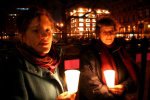 [Sunday 02.10 GMT, Ekklesia] As the deadline set by the unidentified captors of four Christian peacemakers passed with no further news last night, the anxious vigil of families, friends and supporters across the world went on – and the lobbying to have them set free continued. [Picture via CPT. Others here]
The Rev Alan Betteridge, a friend of the abducted Dr Norman Kember, also a member of the Baptist Peace Fellowship, said yesterday: "My worry is, how do the captors extricate themselves from this, without losing face?"
He continued: "Either they lose face if they free them, or they are really out on a limb if they execute them. Somebody has to find a way to let them out of this."
However, Mr Betteridge, a retired minister from Coventry, said he was still hopeful "because of the concerted voice from the Muslim world". [full story and links here]
Comment on this post: FaithInSociety
Jesus said: "Love your enemies and pray for those who persecute you." (Matthew 5. 44)
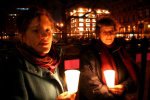 [Sunday 02.10 GMT, Ekklesia] As the deadline set by the unidentified captors of four Christian peacemakers passed with no further news last night, the anxious vigil of families, friends and supporters across the world went on – and the lobbying to have them set free continued. [Picture via CPT. Others here]
The Rev Alan Betteridge, a friend of the abducted Dr Norman Kember, also a member of the Baptist Peace Fellowship, said yesterday: "My worry is, how do the captors extricate themselves from this, without losing face?"
He continued: "Either they lose face if they free them, or they are really out on a limb if they execute them. Somebody has to find a way to let them out of this."
However, Mr Betteridge, a retired minister from Coventry, said he was still hopeful "because of the concerted voice from the Muslim world". [full story and links here]
Comment on this post: FaithInSociety
Saturday, December 10, 2005
[270.2] ANOTHER ADVENT TODAY?
See this fine article (Advent hope for Iraq, captives and Limbaugh) from Sojourners' web editor Ryan Beiler.
Comment on this post: FaithInSociety
See this fine article (Advent hope for Iraq, captives and Limbaugh) from Sojourners' web editor Ryan Beiler.
Comment on this post: FaithInSociety
[270.1] WHY ALL HEARTS ARE SACRED
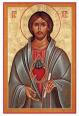 Last year Jim Loney, who is currently a hostage in Iraq, wrote a piece in Catholic New Times on the Sacred Heart [full text here, thanks to my father-in-law, Willard Roth], something he once saw as "saccharine-soaked images of Jesus staring into the blue with puppy-dog eyes." Then he re-visioned the icon of Mary and Jesus through the lens of those torn apart by the lesions of the world, and especially a scratched version of the image at Auschwitz. On seeing that, he writes:
"I fell in love with the Sacred Heart that day. I see it now as a profound meditation on human freedom, on the disarming power of the disarmed life. When we know who we are, a no-matter-what loved child of God, then we cannot but love in that same no-matter-what way, without condition or limit or fear. When we lay down our weapons (whatever they be - the desire to punish, or an inter-continental nuclear missile) and open wide our hearts, we become truly free, a Sacred Heart ready to embrace anyone, do anything, go anywhere.
"Perhaps old Leo XIII was on to something after all when he "solemnly consecrated" all humankind to the Sacred Heart on June 11, 1899. He called it "the great act" of his pontificate. Perhaps history would be a little different if we all took the Sacred Heart to heart. "
More articles by Jim Loney are registered here.
**Latest on Iraq: Embattled Hezbollah backs Iraq 'doves of peace' 09/12/05. See also: Bishop challenges religious zealots over Jerusalem 10/12/05 **
Comment on this post: FaithInSociety
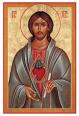 Last year Jim Loney, who is currently a hostage in Iraq, wrote a piece in Catholic New Times on the Sacred Heart [full text here, thanks to my father-in-law, Willard Roth], something he once saw as "saccharine-soaked images of Jesus staring into the blue with puppy-dog eyes." Then he re-visioned the icon of Mary and Jesus through the lens of those torn apart by the lesions of the world, and especially a scratched version of the image at Auschwitz. On seeing that, he writes:
"I fell in love with the Sacred Heart that day. I see it now as a profound meditation on human freedom, on the disarming power of the disarmed life. When we know who we are, a no-matter-what loved child of God, then we cannot but love in that same no-matter-what way, without condition or limit or fear. When we lay down our weapons (whatever they be - the desire to punish, or an inter-continental nuclear missile) and open wide our hearts, we become truly free, a Sacred Heart ready to embrace anyone, do anything, go anywhere.
"Perhaps old Leo XIII was on to something after all when he "solemnly consecrated" all humankind to the Sacred Heart on June 11, 1899. He called it "the great act" of his pontificate. Perhaps history would be a little different if we all took the Sacred Heart to heart. "
More articles by Jim Loney are registered here.
**Latest on Iraq: Embattled Hezbollah backs Iraq 'doves of peace' 09/12/05. See also: Bishop challenges religious zealots over Jerusalem 10/12/05 **
Comment on this post: FaithInSociety
Friday, December 09, 2005
[269.3] HOW DO WE REALLY WANT TO 'EMERGE'?
-742465.jpg) Amidst the agony of waiting and hoping, one of the interesting issues that has arisen from the CPT hostage situation in Iraq is the contrast between how different sections of media (and the communities behind them) have responded to the story. Even though Christian Peacemaker Teams were on to prisoner abuse and Abu Ghraib before anyone else, the mainstream continues to ignore such groups, except when a crisis erupts.
Amidst the agony of waiting and hoping, one of the interesting issues that has arisen from the CPT hostage situation in Iraq is the contrast between how different sections of media (and the communities behind them) have responded to the story. Even though Christian Peacemaker Teams were on to prisoner abuse and Abu Ghraib before anyone else, the mainstream continues to ignore such groups, except when a crisis erupts.
Here in the UK, Christianity is most often only good for a story when it is being silly, when it is declining, when it is fretting about sex, or when its hierarchs are being obnoxious or clueless. The routinely extraordinary things done by groups like CPT are simply "not news" -- even when they clearly are. They just don't fit "the script".
The church media isn't much better. Indeed it is often confused and baffled by people who think that Christian faith is about life transformation rather than churchianity or my-personal-Saviour. A deep commitment to the way of Christ that involves a refusal of violence, the embracing (rather than the haughty rejection) of 'the other', and so on, is for an eccentric minority.
As far as the abductions in Iraq are concerned, the main response of some Christian media outlets has been, in fact, to focus on accusations -- not well researched -- of "irresponsibility" against CPT. There is much church talk of 'mission' and (less often) 'discipleship', but those words are often little more than a cipher for maintaining control and doing nice, respectable things for Jesus.
The biblical tradition has a huge amount to say about peacemaking and social justice, but the Christendom church mindset sees these, at best, as add-ons. Whereas its own insecurities about identity (confusions over sexuality), authority (how to make the Bible our personal or communal weapon) and security (how we can come up with an 'emergent' or 'historic' brand to keep us in business) are what it's actually about, when the chips are down.
As we pray that the captives might emerge, we might ask ... Emergent church? Yes, but what and who really is "the Body of Christ", where has it come from, where is it going, what is it for, and what is it doing? Those remain the central questions. And the answers to them are to be found in places of endeavour, argument and suffering -- not "in church". More like, "in Baghdad".
By humbling contrast, the unexpected outpouring of Muslim respect, concern and recognition for the vocations of Tom, Harmeet, Norman and Jim in Baghdad, and the tragic plight they share with haundreds of abductees in a vortex of oppression and violence, has been noticeable. Of course, Islam has its own major issues with religiously sanctioned revenge. But what the Iraq hostage saga has shown is that there is another way of seeing and acting that people of good faith (whether they are 'believers', humanists, secularists or whatever) recognise as authentic -- if a little crazy -- when they see it.
The excerpt below is from Mark DeVine, writing on Ekklesia and in the marvellous Mother Jones. Among other things, he suggests that the secular left has something to learn from CPT, just as CPT (with all its faults) has been willing to work with, and learn from, others.
My last images of the Christian Peacemaker Teams in Baghdad was of their holding a vigil in Tahrir Square to protest against the detention and mistreatment of Iraqis by the US military in Abu Ghraib. This was in late March 2004, months before anyone in the United States had even heard of Abu Ghraib, or bothered to consider how our armed forces were treating detainees in the war on terror. But CPT knew full well what was going on in Abu Ghraib--that's why they were in Iraq, to "witness" the realities of the occupation--and they were determined to make sure that the Iraqis saw that there were Americans, and westerners more broadly, who were willing to put their bodies on the line to protest against such abuses. It's too bad that it's taken this tragedy to get the rest of us to listen. [Full article here]
Mark LeVine is Associate Professor of modern Middle Eastern history, culture and Islamic studies and author of Why They Don't Hate Us: Lifting the Veil on the Axis of Evil (Oneworld Publications, 2005). Visit Mark LeVine's website here. His article also appears in the latest Mother Jones.
Comment on this post: FaithInSociety
-743708.jpg) Amidst the agony of waiting and hoping, one of the interesting issues that has arisen from the CPT hostage situation in Iraq is the contrast between how different sections of media (and the communities behind them) have responded to the story. Even though Christian Peacemaker Teams were on to prisoner abuse and Abu Ghraib before anyone else, the mainstream continues to ignore such groups, except when a crisis erupts.
Amidst the agony of waiting and hoping, one of the interesting issues that has arisen from the CPT hostage situation in Iraq is the contrast between how different sections of media (and the communities behind them) have responded to the story. Even though Christian Peacemaker Teams were on to prisoner abuse and Abu Ghraib before anyone else, the mainstream continues to ignore such groups, except when a crisis erupts.Here in the UK, Christianity is most often only good for a story when it is being silly, when it is declining, when it is fretting about sex, or when its hierarchs are being obnoxious or clueless. The routinely extraordinary things done by groups like CPT are simply "not news" -- even when they clearly are. They just don't fit "the script".
The church media isn't much better. Indeed it is often confused and baffled by people who think that Christian faith is about life transformation rather than churchianity or my-personal-Saviour. A deep commitment to the way of Christ that involves a refusal of violence, the embracing (rather than the haughty rejection) of 'the other', and so on, is for an eccentric minority.
As far as the abductions in Iraq are concerned, the main response of some Christian media outlets has been, in fact, to focus on accusations -- not well researched -- of "irresponsibility" against CPT. There is much church talk of 'mission' and (less often) 'discipleship', but those words are often little more than a cipher for maintaining control and doing nice, respectable things for Jesus.
The biblical tradition has a huge amount to say about peacemaking and social justice, but the Christendom church mindset sees these, at best, as add-ons. Whereas its own insecurities about identity (confusions over sexuality), authority (how to make the Bible our personal or communal weapon) and security (how we can come up with an 'emergent' or 'historic' brand to keep us in business) are what it's actually about, when the chips are down.
As we pray that the captives might emerge, we might ask ... Emergent church? Yes, but what and who really is "the Body of Christ", where has it come from, where is it going, what is it for, and what is it doing? Those remain the central questions. And the answers to them are to be found in places of endeavour, argument and suffering -- not "in church". More like, "in Baghdad".
By humbling contrast, the unexpected outpouring of Muslim respect, concern and recognition for the vocations of Tom, Harmeet, Norman and Jim in Baghdad, and the tragic plight they share with haundreds of abductees in a vortex of oppression and violence, has been noticeable. Of course, Islam has its own major issues with religiously sanctioned revenge. But what the Iraq hostage saga has shown is that there is another way of seeing and acting that people of good faith (whether they are 'believers', humanists, secularists or whatever) recognise as authentic -- if a little crazy -- when they see it.
The excerpt below is from Mark DeVine, writing on Ekklesia and in the marvellous Mother Jones. Among other things, he suggests that the secular left has something to learn from CPT, just as CPT (with all its faults) has been willing to work with, and learn from, others.
My last images of the Christian Peacemaker Teams in Baghdad was of their holding a vigil in Tahrir Square to protest against the detention and mistreatment of Iraqis by the US military in Abu Ghraib. This was in late March 2004, months before anyone in the United States had even heard of Abu Ghraib, or bothered to consider how our armed forces were treating detainees in the war on terror. But CPT knew full well what was going on in Abu Ghraib--that's why they were in Iraq, to "witness" the realities of the occupation--and they were determined to make sure that the Iraqis saw that there were Americans, and westerners more broadly, who were willing to put their bodies on the line to protest against such abuses. It's too bad that it's taken this tragedy to get the rest of us to listen. [Full article here]
Mark LeVine is Associate Professor of modern Middle Eastern history, culture and Islamic studies and author of Why They Don't Hate Us: Lifting the Veil on the Axis of Evil (Oneworld Publications, 2005). Visit Mark LeVine's website here. His article also appears in the latest Mother Jones.
Comment on this post: FaithInSociety
[269.2] ROWAN WILLIAMS INTERVIEWED
For those who want to know "where he's at" at the moment, BBC Radio Five Live presenter Simon Mayo interviewed Rowan Williams, Archbishop of Canterbury, for 35 minutes a couple of days ago. You can hear the whole thing here (in Real Audio format). Includes discussion of pretty much every current hot topic. Thanks to Thinking Anglicans for the tip. See also Williams' 'What is Christianity?' talk for a Muslim audience in Pakistan.
Comment on this post: FaithInSociety
For those who want to know "where he's at" at the moment, BBC Radio Five Live presenter Simon Mayo interviewed Rowan Williams, Archbishop of Canterbury, for 35 minutes a couple of days ago. You can hear the whole thing here (in Real Audio format). Includes discussion of pretty much every current hot topic. Thanks to Thinking Anglicans for the tip. See also Williams' 'What is Christianity?' talk for a Muslim audience in Pakistan.
Comment on this post: FaithInSociety
Subscribe to:
Posts (Atom)