Friday, April 27, 2007

THINKING FOR THE DAY...

One of the trials of writing commentary for a wide audience is that you are always having to ask yourself, "how could this be misunderstood?" Then you try to be clearer. Then you have to face up to the fact that you still get it wrong. The onus of communication is on the communicator, but it's a two-way street... more than that, it's a multi-channel zone with loads of interference. Getting heard is a human privilege. Getting through is a grace.


All of which is a prelude to saying that, after some useful feedback, I changed the title of my latest Ekklesia column from Why we need to rid ourselves of 'God slots' to this one: Why we need to rid ourselves of the 'god of the slots'. The reason is this: given that there is a question in the air about 'Thought for the Day' on BBC Radio 4 (some of us want it open to people of different life stances, the churches and its producers only to "the religious"), it could have been construed as somehow anti-TFTD. This is far from the truth. Ekklesia - which has a stake in the programme, since Jonathan Bartley is a contributor - wants to see it as a slot for a wide range of takes on life, not a narrow "God slot" (as people like to call it). This article is, in a sense, a contribution to that debate, but its main concern is to show wht "the god of the slots" in culture is the equivalent of "the god of the gaps" in science -- a related, but distinct, issue.

As I've also added: "TFTD is an important space for looking at how beliefs-in-practice view the task of living, but it does not have to exclude those who do not fit a questionable definition of "religious". See some more detailed comments on: Losing our (radio) religion?
NOT EXPECTING SOCIETY TO DO GOD FOR US

Why we need to rid ourselves of 'the god of the slots' The church looking for ‘God slots’ in relation to culture is like religion seeking a ‘God of the gaps’ in relation to science: a huge mistake. The Gospel points us elsewhere.

In a post-Christendom era, Christians cannot expect the education system, government or the media to do their job for them or make other people Christians. If they do that they will be constantly disillusioned, they will be despised, and they will lose the capacity for independent thought and subversive action.

There are two sides to this: exercising freedom, and recognising limits. Rowan Williams put it well in his BBC Newsnight interview on Tuesday 24 April 2007. First, in response to the question about whether Bush and Blair had prayed over the Iraq war, he turned the issue on its head. Politicians are not there to pray. But if, by chance, these powerful individuals had prayed, maybe they would have opened themselves to a decision that went against their instincts and interests – maybe the Prince of Peace, whom they both name, would have convinced them not to put their trust in armies. Who knows?

Then Dr Williams said this: “I don't expect government to be talking religion. I do expect government to be giving space and opportunity for the kind of moral discussion informed by religion, as by many other strands of humanistic thought.”

That is both pluralistically defensible and theologically appropriate. Taking “religion” to mean, in this case, the life and testimony of a group of people (rather than the institutional abstraction I have criticized), the Archbishop seemed to be suggesting that both those of faith and those whose commitment to human flourishing is otherwise defined should be part of a conversation sustained by public space, but without expecting government to talk their language or do their work. (He then spoiled it all by defending bishops in the House of Lords, but no-one is perfect).

All of which makes me wonder… if Christians were to stop bleating on about protecting their preferential “slots”, and were instead to focus on what they had to offer in terms of peacemaking, hospitality, community-building, forgiveness, and many other gifts of the Gospel, people might just be interested in broadcasting them – not because of a “religious label”, but because they had something worthwhile (and a bit quirky) to say. More here.

Monday, April 23, 2007

BLOG ON EKKLESIA

I am splitting my endeavours between FinS and my Ekklesia weblog, which is here: http://www.ekklesia.co.uk/blog/3
A SYMBOL OF FAITHFUL NON-CONFORMITY

Waiving the flag? Simon Barrow, Guardian Comment-is-Free, April 23, 2007 5:55 PM Printable version Despite the jingoism surrounding St George, his story has another side that goes well beyond narrow nationalism.
ON A MUCH LIGHTER NOTE

I never could resist a good lightbulb joke: on which note, see C of E lightens up. For followers of the UK political scene, the Gordon Brown and David Cameron ones came straight off the top of my head. Though that isn't saying someone else hasn't thought of them too. The 'freemarket' one I started as an anti-monetarist quip in 1981, and a year later it came back to me. Dozens of others probably had the same idea. Duff 'memes' theory is not needed for this kind of thing to happen. Btw, for real aficionados, how about: Q. How many David Milibands does it take to change a lightbulb? A.Gordon is the man for that job, without a shadow of a doubt. Footnote from Matt Foot. (Btw, Jonathan Bartley tells me the counsellors one is too old. But I still like it. Sorry, Jon. Shine on, you crazy diamond...)

Sunday, April 22, 2007

HEADING FOR UNCHARTED DEPTHS

"Because we have not sought the safety of familiar, wide-buoyed waters, but claim a wide universe for our domain, we shall always find ourselves sailing towards continents of spice and treasure. We will be asking questions of import, for which there are no certain answers." --Anthropologist Frederica de Laguna (1906-2004).

Of course there was a bit of looting to complicate things in practice, but as a metaphor it works very well indeed.

Hat tip to Michael Marten... who tells me to thank Laurie King.

Wednesday, April 18, 2007

FALLIBILITY AND TRUTHFULNESS

"...The culture of thinly disguised nastiness [which we see in some religious communities] is also a more general feature of public life. We say we want politicians to admit errors and apologize (Des Browne being a recent example). But when they do so, we say they are weak and unfit for office – and we do so with little sense of irony or self-knowing. In the process any possibility of achieving common truthfulness is lost. Disagreement is an unavoidable part of human development. Argument is a good thing. Suspicion towards power is vital. But without a sense that we are held in love these things lose a sense of proportion and can spill over into contempt or even hatred."

See further: How these Christians hate one another.

(While I'm talking about apologies - please accept mine if you are annoyed by the intrusive 'pop ups' - iLead in particular - which seem to occur when visiting this site. They are planted by my stat counter, I think. I'll see if I can find another at some point)

Sunday, April 15, 2007

RETHINKING ISLAM CHRISTIANLY AND HUMANLY

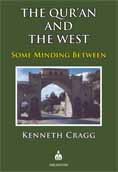
I have substantially redrafted and added to an earlier review article about Kenneth Cragg, including two of his more recent books, in the culture and review section of Ekklesia: Muslims, Christians and the global human challenge.

In addition to developing a fascinating Christian interpretation of Islam which he then offers back in friendship to Muslims, recognising both points of contact and significant differences, so Cragg has also tried to forge a new kind of relationship betwen 'the religious' and 'the secular' (to use two masively overgeneralised current categories).

"Just as he illustrates so tellingly how ideological secularism is (quite literally) incomprehensible from the perspective of Islam, so many secularists will want simply to reverse [the] sub-title [of one of his books] so as to render it ‘divine meaning in human question’, and thus dispose of God. The author is well aware of this challenge. What we do with the divine Name is crucial for him. His response, however, is not some unfeasible pan-religious apologetic. Nor is it over-accommodation to populist critiques of religion which have failed to take it seriously. Instead he concentrates on exposition of 'the good' (starting from particular traditions) on the one hand, and the allocation of different (but shared) ethical responsibilities, on the other. In the same way that Cragg has humbly walked with other religions and cultures in order to discover both common hope and divergence among them, so he courteously invites those to whom faith is anathema to reconsider how human beings and the world might be positively reconstrued by what they reject."
THE SHOCK OF THE NEW

Being stuck with a God who raises the dead (Ekklesia). Easter is awkward for the church, because its revolutionary message leaves it nowhere to hide religiously, politically or intellectually, argues Simon Barrow.

Friday, April 13, 2007

LIFE BEYOND THE WAR ZONE

Brian McLaren: Which Holy War? (SojoNet). "We've probably heard many people here in the US ask, 'Why aren't there more moderate Muslims speaking out against the violent extremists and calling for reform in Islam?' As I reflected on Roland Martin's editorial on Good Friday, 2007, I couldn't help but think, 'Maybe around the world, "behind our back," so to speak, people are asking a similar question about Christians in the US.' These reflections stayed with me over the weekend and were with me still on Easter Sunday. In Romans 8, St Paul says that the Spirit who raised Jesus from the dead lives in us. Those words challenged me to believe that the impossibility of resurrection is indeed possible ... not just in our individual lives, but also in our religious communities, if we are truly open to the life-giving, death-defying Spirit of God."

Sunday, April 08, 2007

MAKING A TRIAL OUT OF CHRIST

This from an excellent article in the Observer by Richard Harries on the dilemmas faced by Rowan Williams - and, inter alia, on the difficult business of being a Christian in a culture (and that includes a church culture, sadly) marked by virulence and easy self-regard.

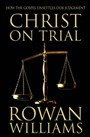
"[H]is style is hardly made for our simplistic, untruthful, soundbite culture. A good example is contained in his book, Christ on Trial. Rowan reflects on the silence of Christ, as recorded by Mark's Gospel. Jesus simply refused to answer the questions put to him about who he was and Rowan writes: 'What is said will take on the colour of the world's insanity; it will be another bid for the world's power, another identification with the unaccountable tyrannies that decide how things shall be. Jesus described in the words of this world, would be a competitor for space in it, part of its untruth.' Rowan will know, better than most of us, that anything he says will be part of the world's untruth and the more he conforms to the expectations of a headline culture, the more untruth there will be in it.

"One of the threads running through his writing is the idea that true religion always leads one to question oneself, rather than make claims over others. Jesus is not a possession or a badge of superiority, but the one before whom you stand, in gentle self-questioning."

Incidentally, the headline writer has, I fear, missed the point of this piece. It isn't a plea for the church to "ease the pain of Rowan's Passion" (except in the rather prosaic, though not unimportant, sense of "stopping being so nasty") -- rather, it's a plea to understand the issues he is wrestling with, and the way he is trying to wrestle with them, as part of a passion which isn't finally about "them and us", but concerns a new creation wrought from pain, difficulty and failure. In other words it is a call to stop casting stones and start listening to the Gospel. Something all-too-easily bypassed by institutional 'christianism' - a term I think we should use for the painful distortions of Christianity wrought in its name.

I can't recommend Christ on Trial highly enough, by the way. A superb book which, as the blurb says, "draws not only from the Bible, but also from contemporary fiction, film and theatre... [to] explore the ways society continues to put Christ on trial today. In fact, all Christians stand with him before a watching world. How we respond to this challenge is the focus of Christ on Trial. It increases our confidence in the faith we have received, and invites us to discover 'what we are and what we might be in God's sight'."

See also: Why Rowan Williams helps stem the drift to idiocracy.

Saturday, April 07, 2007

CHURCHES PLEDGE TO MAKE PEACE HISTORIC

See here for details of the International Ecumenical Peace Convocation.

Friday, March 23, 2007

EXPLORATIONS INTO GOD TODAY

I have just published what I must admit is a fairly dense (though I hope not opaque) essay for Ekklesia entitled What difference does God make today? Let me introduce its purpose in this way: I recall that a number of years ago Peter Selby, then research professor in applied theology at the University of Durham, now Bishop of Worcester, commented to me that today - in an environment where the presumption is widespread that Christian belief as a serious intellectual proposition is finished - all theology needs to be, in a certain sense 'fundamental theology'.
The term has nothing to do with fundamentalism. It is derived from Catholic scholasticism and refers to our accounts of foundational elements of the Christian narrative - the identity and meaning of God, Christ, the Spirit, and so on. What Peter was saying is that people have mostly lost touch with a coherent way of speaking about such things. This is partly because they were assumed rather than argued for in civic 'Christendom culture', and partly because education within the churches has become so thin - at least when it comes to exploring core issues of belief. The upshot is that attempts to speak of Christian perspectives in the public arena have lost their moorings. Many people have ceased to have much of a clue what we in the churches are talking about. To them we speak in a code which they can no longer crack. This is our loss before it is theirs. The onus of communication is on the communicator. Indeed I think things are worse than this. It is frequently observed that communication is indivisible, and in that sense Christians struggle to speak to themselves too, as the appalling 'debates' about sexuality indicate. The Word has become silent, and not in a humbling and chastening way.

More than 60 years ago, Dietrich Bonhoeffer recognised this problem. He famously suggested in his prison diaries that it might now be necessary to find ways of expressing biblical ideas in non-biblical language for a post-religious age. His death at the hands of the Nazis tragically truncated his thinking on this and many other matters, but it is fairly plain that he was not talking about some superficial 'demythologisation' programme, or the evacuation of Christian meaning into a hollowed secular shell. Even as he wrote (knowingly) from the depths of Enlightenment culture, and out of one of the darkest hours of modernity, he remained a person sustained and resourced by the deep piety and theologia crucis of Lutheranism.

What he recognised, I think, was that in a world of evolving understanding and cultural autonomy, sustaining the core dynamism of Christian belief is not about building walls around inherited expressions, as if the fleshly Word really was words, but engaging in a process of continual re-expression -- finding ways, if you will, of digging fresh insight from ancient quarries, re-resourcing contemporary speech from the riches we have inherited. David E. Jenkins used to point out that this was, in itself, a biblical procedure. The living God of the Bible, in the words and events of Jesus and the prophets, is always to be encountered in the contemporary, not locked up in 'the biblical'. The language that speaks of a God beyond our grasp will always be fresh and new, and yet will - to those who recognise its resonances - simultaneously reverberate with what has been said and done and performed throughout the ages. (Something like that.)

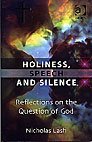
Anyway, my essay is very far from achieving any of this, and its formulations are probably still too 'religious'. But it is an attempt, heavily indebted to the work of Nicholas Lash, and especially his book Holiness, Speech and Silence, to reconsider "the question of God today" in terms of contemporary philosophical challenges and the demanding call to discipleship - the following of Jesus through thick and thin. The key questions are 'who is God?', 'how do we speak of this God in a work of plurality, pain and darkness?' and 'what distinguishes God-talk that can claim vitality and aspire to truthfulness from the fantasy and non-sense of much religion?'

It's a stab, anyway. And it's based on my growing conviction that a durable theological language is not reductionist but subversively resourceful - in Walter Brueggemann's words, it "funds the postmodern imagination" out of a narrative stock and a grammar which connects us to the continuing liveliness of the God beyond our expectations and grasp - but who nevertheless touches us at the deepest, most vulnerable places of human longing and becoming.

[Apologies for the infelicities in the earlier version of this post - written late at night, and I was tired]

Wednesday, March 21, 2007

A CLASH OF TOTALISMS

In reading Terry Sanderson's Guardian article on the original sin of religion, and in responding to it (Resisting the polarizing mindset), I was brought back to some comments by Catheine Madsen, who is neither Christian nor atheist, from what I gather. She is, however, a wise woman:

[O]ur obligation to our fellow humans is to make our own point of view not unassailable but intelligible. She goes on (in Learning to converse like adults): [P]ainstaking thinkers of all cultures know each other intuitively across the boundaries of opposition. Totalitarians do not like them; indeed they are always at risk from the totalitarians in their own culture as well as those in the enemy's. In spite of this - or because of it- they are determined to construct a trustworthy language, a language dense and durable enough to resist the corruptions of politics.

Tuesday, March 20, 2007

TROUBLE IN THE TEXT DEPARTMENT

A couple of new review and culture articles from me on Ekklesia: Judas makes another comeback (The story about how Judas has been misrepresented in the Gospels and was mainly trying to rescue Jesus from false notions of messiahood has surfaced again - via a Jeffrey Archer 'novel'); and Endism is nigh, texts are tricky (responding to the apocalyptic non-sense purveyed by a good number of internet Bible sorcerers). There's also a lively debate on writer Dave Hill's excellent weblog Temperama about A. C. Grayling's less than nuanced into the debate about religion - An extended yawn. I normally try to keep clear of this kind of thing, but Dave's helpful post was too much to resist. And Lent is exactly the right time of year of re-negotiate with our temptations. Oh, I should also plug this, too: Current Research: Reconsidering the secular.

Monday, March 19, 2007

CHRISTIANITY WITH ATTITUDE

That's the title of a new book from my colleague and friend Giles Fraser, pubished by Canterbury press and available to order through the internet here (through Ekklesia's affiliate shop). There's a sample chapter ('Family Values') here, in *.PDF format. Much of the material is derived from columns in the Guardian and the Church Times, along with BBC Radio 4's 'Thought for the Day'. The blurb sums up the overall impact as follows: "Giles Fraser is one of the most passionate and outspoken figures in the church today, and a refreshing antidote to the bland and soggy language of much of modern Christianity - not least, he admits, of his own liberal tradition. Inspired by the fiery language of the Bible, whose writers believed in what they said as if their lives depended in it, here is a real prophet for our times who has the honesty and bottle to say what he believes without hesitation or qualification. In Christianity With Attitude he gets to theological grips with a wide range of subjects including the morality of war, the meaning of death, church committees, sex, atheism, giving up smoking, Bratz girls and why you can't trust Christian cowboys."
IS IT MAD TO CRY DISCRIMINATION?

Crackpots or cracked pots? (Guardian comment-is-free). Simon Barrow March 19 07, 12:30pm: Those who claim that Christians are being discriminated against are wrong, but not mad. We need careful argument rather than demonisation as the demise of Christendom generates change and uncertainty.

Sunday, March 18, 2007

SURVEY SAYS... YOU HAVE MAIL

We are in for another row about public religion, after research commissioned by 'The Heaven and Earth Show' (BBC survey says Christians feel they are discriminated against, 18 Mar 2007) - and a debate being pushed by The Mail on Sunday.

Further responses from Ekkesia: UK Christians urged to be positive not negative about loss of status and Grounds for discrimination? Full press release: Crying 'discrimination' harms churches' message.

Saturday, March 17, 2007

FOOD FOR THOUGHT

Various additions by Simon Barrow: The History of Christian Thought - Review; a feature article Lords and bishops go a-leaping (reform of the second chamber in the UK); and Current Research: Reconsidering the secular.

Comment on this post: FaithInSociety

Friday, March 16, 2007

FAMILY MEANS MAGNANIMITY

The contested nature and shape of 'the family' in contemporary Christian imagination and practice has been thrown up by many recent arguments in Britain: about the place of LGBT people in the church, in the Catholic adoption row, via the question of children at communion, and more. The careful and thoughtful argument about why magnanimity (rather than exclusion) is at the heart of an alternative vision of family, rooted in the dynamic of the gospels, is set out by Deirdre J. Good in her important new book, Jesus' Family Values. It's available (via the link) from Metanoia's bookshop. Today Ekklesia offers an introductory excerpt: Wrestling biblically with the changing shape of family.

"When I kneel side by side with someone whose construction of family looks radically different from mine, I witness to a God whose ways are not our ways, whose judgments cannot be limited by our finite understanding, whose generosity and creativity must not be circumscribed by our tiny hearts and minds." ...

"Reading ancient texts like the gospels or letters of Paul is hard work. It’s not just a question of investigating ancient sociological or literary contexts; it’s a question of asking critical questions about bringing ancient texts to bear on modern realities. Our interrogation of ancient texts, more often than not, lays bare not so much the texts as our own presuppositions. But our fidelity to these texts and their authority for us makes it imperative that we continue to do it in full awareness of the provisional character of our readings and applications."


Comment on this post: FaithInSociety